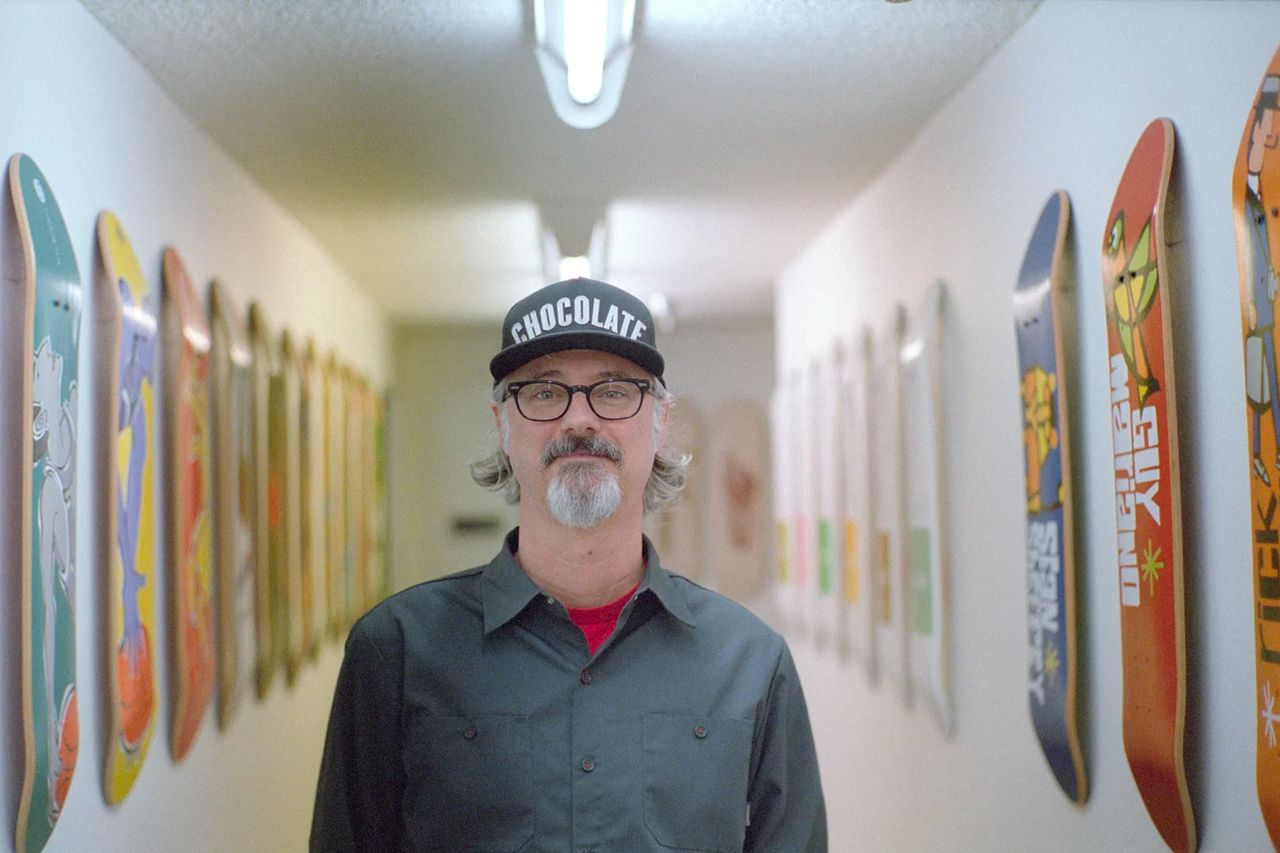
Photo by Tobin Yelland
Like an orchestra conductor, he guides the artistic direction of major skateboard brands. From Girl to Element, via the late Uma Landsleds, his mark can be seen everywhere, from skate shop walls to boards marked by the street.
Since your early days, you’ve moved between publishing, art direction, writing, illustration, and graphic design. How did this path take shape, and what drives you to work across so many different forms of expression?
Well that’s a complicated question and a more complicated answer. I’ll keep it simple. I like to make all kinds of things. I like drawing, I like writing, graphic design, publishing, making music (and if I could I would really like to weld). I enjoy all of those things and I’ve always found it fun to move around and sometimes blur the lines between them. For instance, with illustration and the fine art – I find my drawings creeping into my multimedia collage work all the time. And my graphic design history definitely plays a part in all the art I make. These days, when I’m painting and collaging design directs the looks of whatever piece it is. Even when I’m inprovising.
But a few years ago I did start to pare down the disciplines. I stopped writing professionally. I figured it was my worst discipline so I mostly put it down to concentrate on other things. Writing seemed an easy choice to drop, robably because I made the mistake of going back and reading my earlier work. Terrible stuff.
And as far as publishing goes, I’ve pulled back there as well. Now it’s pretty much just documenting my work in fun way. My latest project with Bend Press is a book called “The Lost Singles” which features over 20 of my 7”x7” paper collage as singles record covers. That booklet inadvertently got me invited to a show in DC last year. Great opportunity. It was a dream of mine for years to blow up Bend Press into a legit publishing company. Very time consuming, expensive and no one reads anymore.
I’ve had people tell me to concentrate on doing one thing to really master it. That’s boring. Life’s short. I like to tinker.
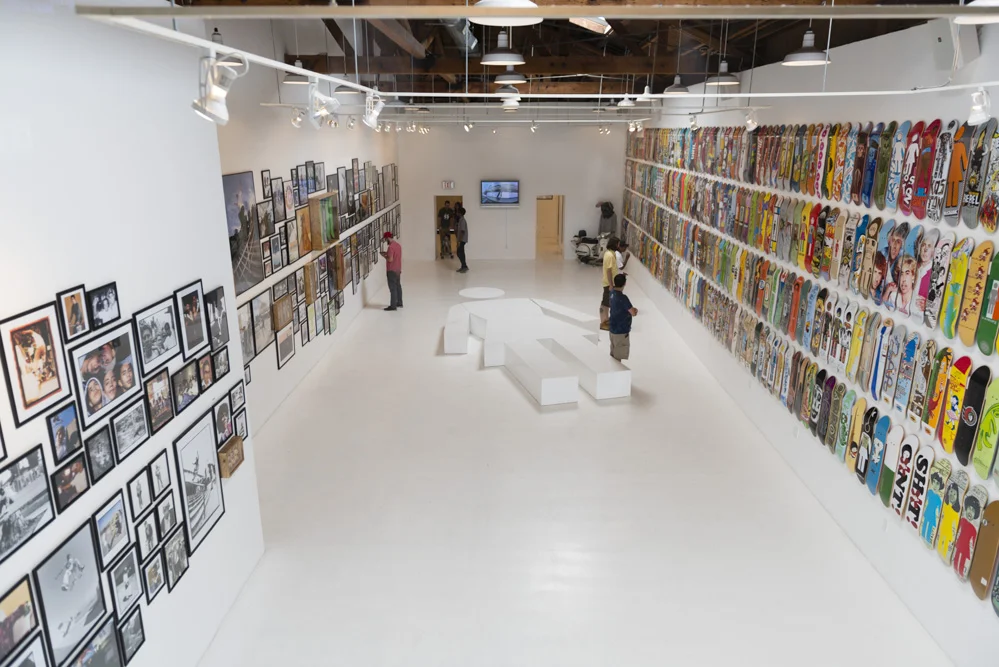
View of the 20 years of Girl Skateboards exhibition
…if I wanted to actually make a living at being creative, do it as a graphic designer.
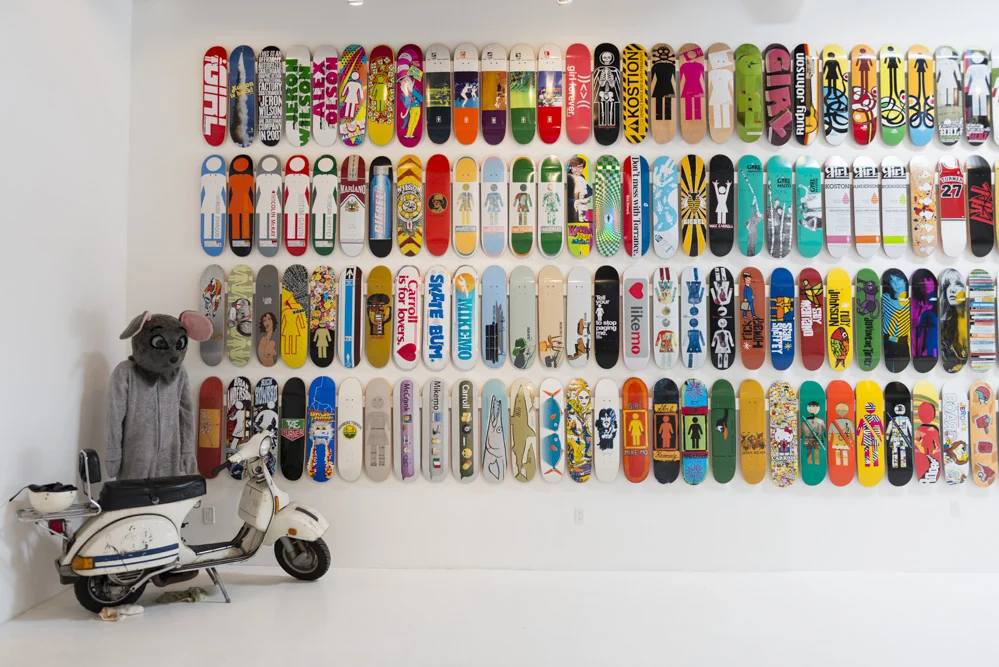
View of the 20 years of Girl Skateboards exhibition
At 20, you landed your first job at Freestylin’, a BMX magazine based in Los Angeles. What place did BMX hold in your life at that time, and what did that experience teach you before skateboarding entered the picture?
I skated as a youngster in Florida in the early ’70s. Plastic Makaha banana deck with an early version of loose bearing urethane wheels. That must have planted a seed. Then at 13 or so, my family moved to Cheyenne, Wyoming. Skateboarding just didn’t exist there. But there was a lot of dirt. My dad was a motorcycle head so he got us dirt bikes and the 2 wheeled thing just engulfed me. By ’76, ’77 my friends and I had stripped down our 5-speed 20” bikes and started making tracks. Hooked.
When ABA BMX racing came to our town, our heads exploded. We discovered BMX Action and the world literally changed for us. After I got my license at 16, we were driving ourselves all over Wyoming, Colorado, Nebraska, Utah to race. All the money we made from jobs went into our bikes and travel. Did that for years.
I didn’t really start to really skate again until I went to art school in ’82, ’83 in Denver, Colorado. That’s also when music started to become such an important part of my life. We started to go to shows and buy records – the scene had busted wide open with punk. All of those influences – BMX, skateboarding, art and punk set me on a path. And it was during that time that I moved to California to help start Freestylin’ magazine. Dream come true. It seemed there weren’t any boundaries for us. Magazines, zines, skating, and music became the driving forces in my life.
BMX and skateboarding and art school taught me about how important community is.
What was your first connection to illustration and graphic design?
I think drawing comics and comic strips started me “designing” – putting drawings together. In high school we had a killer art program and my teacher, who was a big influence on me, told me if I wanted to actually make a living at being creative, do it as a graphic designer. It felt natural to go that direction.
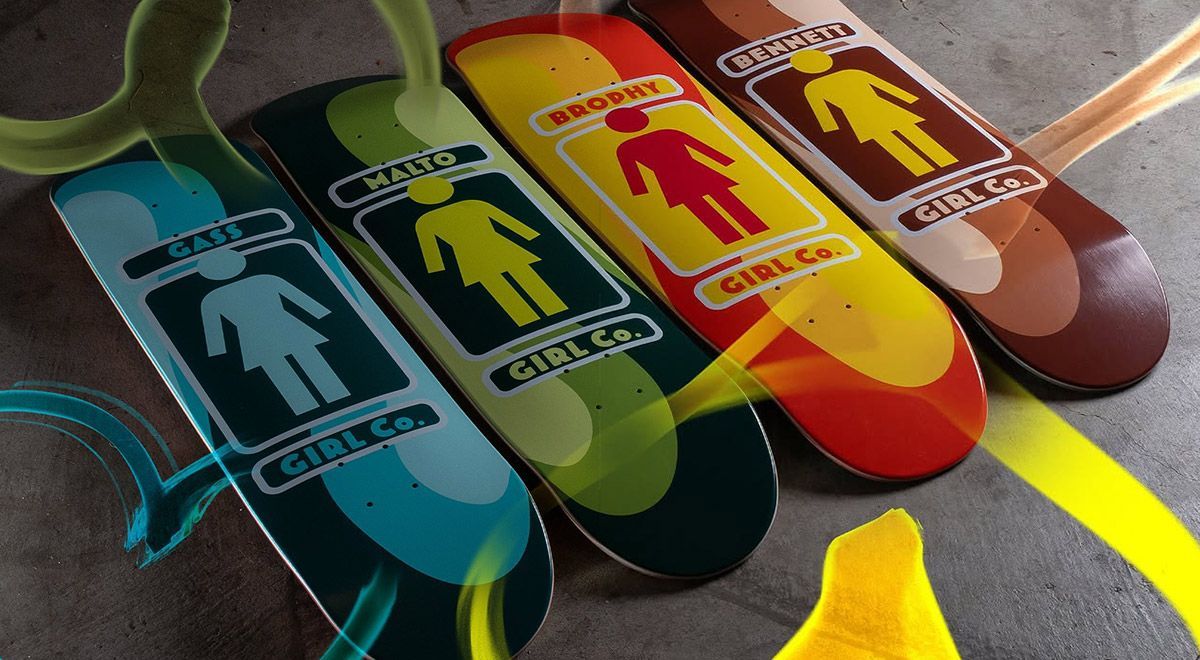
93 Til Lovers by Andy Jenkins for Girl Skateboards
We just never bothered branding Girl visually. It sort of did it by osmosis.
In 1993, you took over the art direction of Girl Skateboards after Spike Jonze. How did you experience that transition, and what do you remember about your first graphics for the brand?
Rick, Spike, Mike and Megan stared Girl in ’93 and I freelanced for the first year. I knew Megan and Spike from working together at the BMX mags. I met Rick and Mike soon after. I remember so vividly sitting in front of a monitor with Rick Howard and designing the whole first Girl series. I was working on Dirt magazine at the time with Spike and Mark Lewman. When I quit Dirt, I joined Girl full time in ’94. Who knew. We were just a bunch of kooks trying to do something.
It’s funny, the first boards we made didn’t even say Girl on them! Maybe we were too self conscious? Who knows. It was a fun time making whatever we wanted to make.
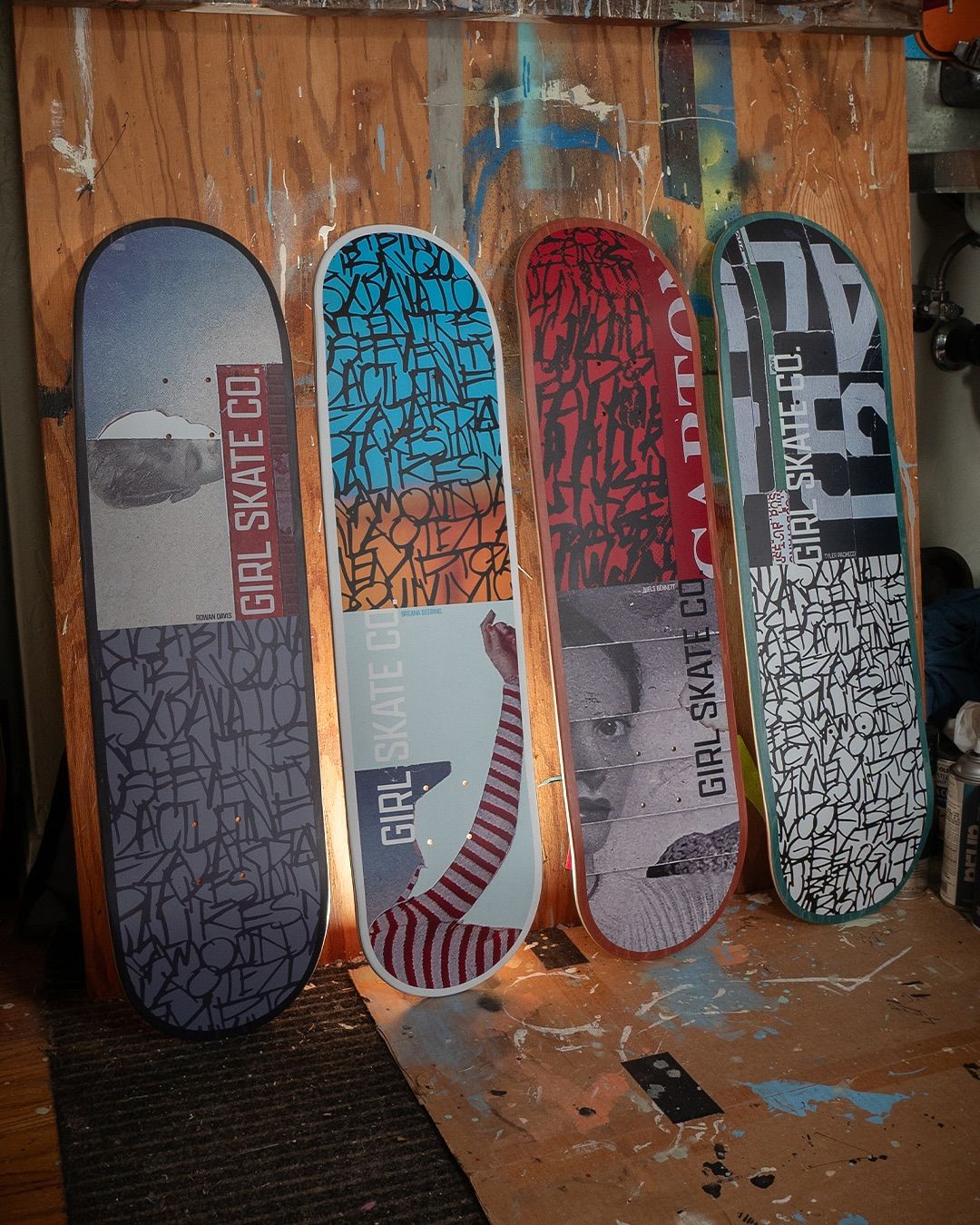
Splinter series by Andy Jenkins for Girl Skateboards
At that time, did you already have a clearly defined creative process when designing a series of boards? How has that process evolved over time?
No clear process at all. I knew how to draw, design and make production files for decks, wheels, ads, packaging, etc. Spike knew how to shoot skateboarding, Rick and Mike skated and put together an insane team. And Megan made the whole crazy machine work. And that’s what we did. Things seemed to move so fast.
We just never bothered branding Girl visually. It sort of did it by osmosis. We never took anything or ourselves too seriously. I think that’s what help create the irreverent funny vibe. Looking back on it years later I started to refer to our “method” our “branding” as anti-branding.
Is there a series or a board you’re particularly proud of? And is there a collaboration that stands out as especially meaningful to you?
There have been so many great moments over the years. The collaboration what was/is the most meaningful to me are the bonds we all made with each other. We dubbed our art department the Art Dump. I’ve been so fortunate to work with some really amazing creatives over all these years. The interconnections with the skate teams and Rick as the guiding light. It just seemed right.
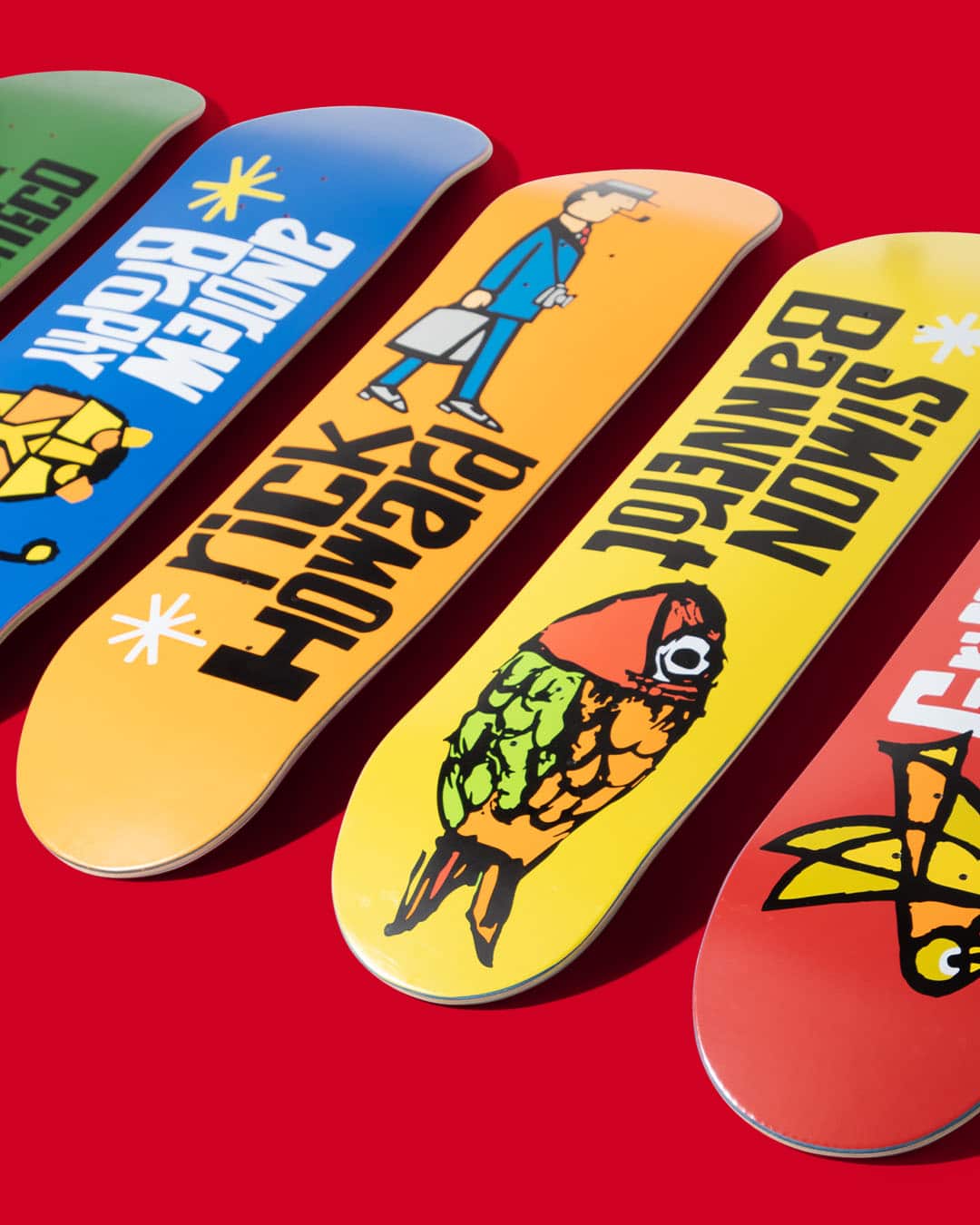
Pictograph series by Andy Jenkins x Girl Skateboards
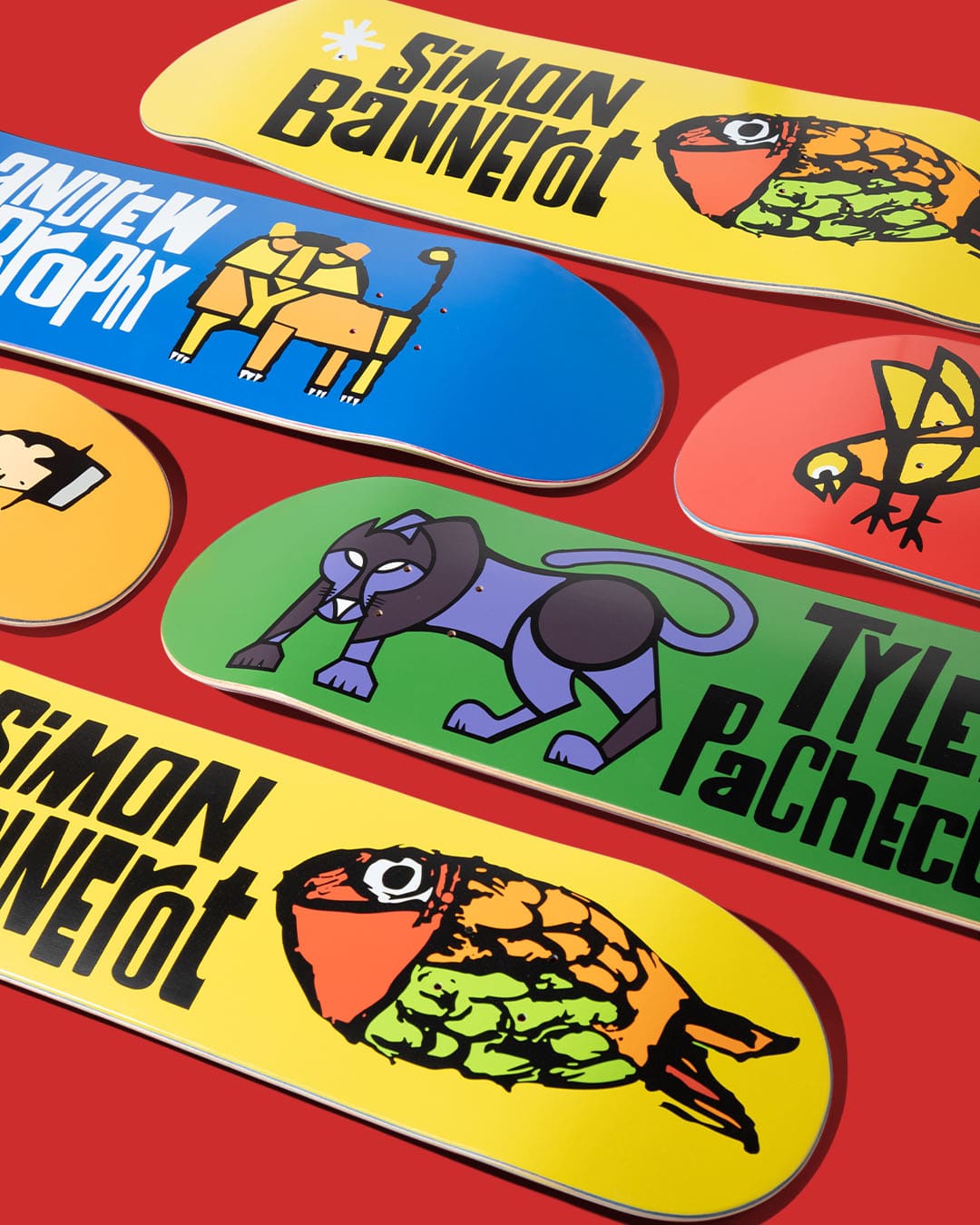
Pictograph series by Andy Jenkins x Girl Skateboards
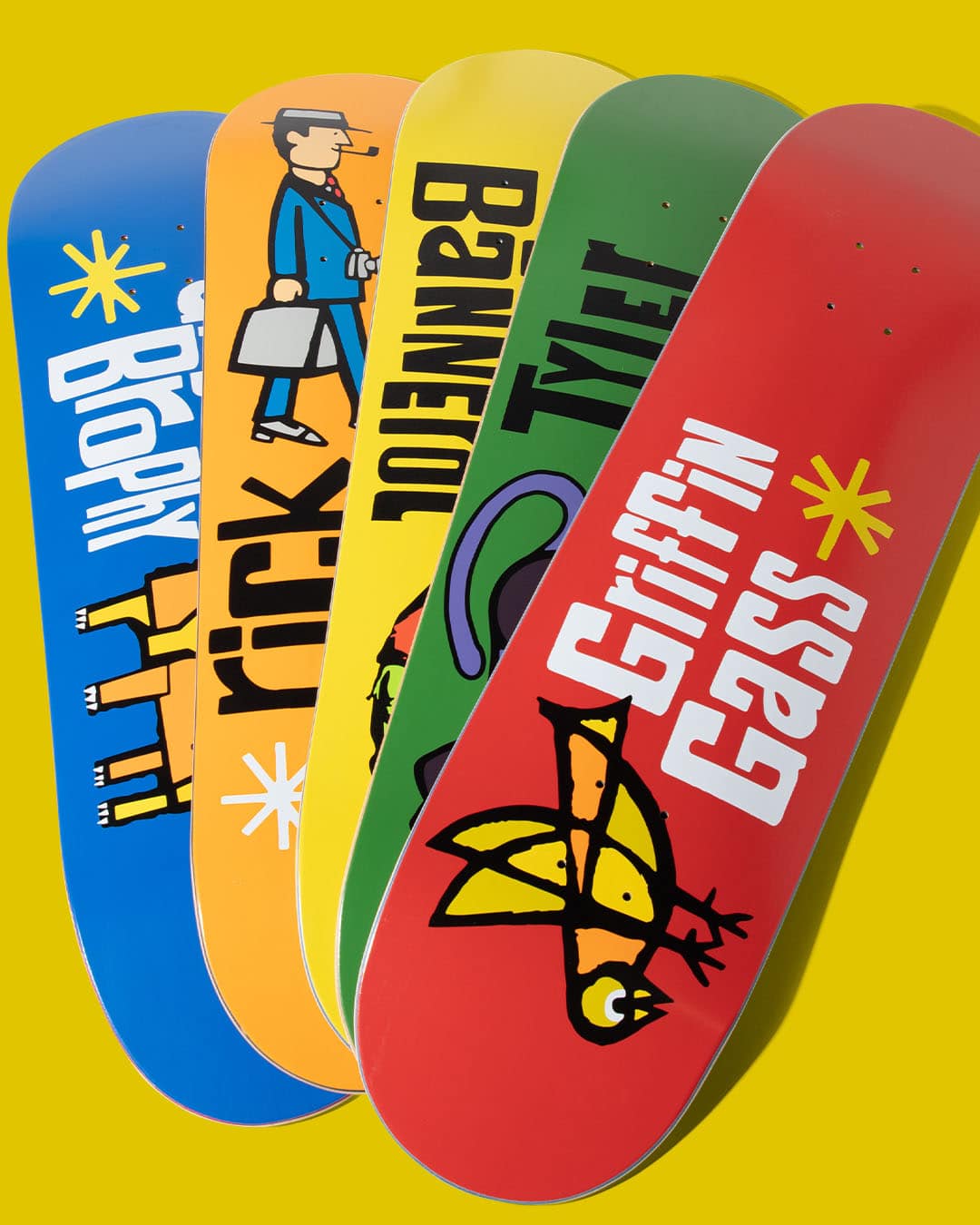
Pictograph series by Andy Jenkins x Girl Skateboards
I’m so grateful to be back at Girl. It was like coming home.
As you moved from art director to creative director across several brands, what truly changed in your day-to-day work?
The Art Dump. We started to hire in-house designers in about ’95 – Bucky Fukumoto was the first – when we moved the company down to Torrance. As brands popped up, we hired more and more graphic and apparel designers to handle them. Johannes Gamble, Michael Leon, Tony Larson, Andy Mueller, Kevin Lyons… The Art Dump was pretty big at one point. My role was to sort of corral everyone and still head the creative at Girl.
We would have impromptu meetings once a week and go over the work – but mostly we talked shit and brain stormed. There was an art director for each brand, but we all crossed over brands all the time – that made the whole process of creating super fun. We had really good crews over the years.
In 2017, you took on the role of Global Art Director at Element. In what ways does this position differ (or not) from what you were doing at Girl?
Completely different. Girl was/is a family, Element, the time I was there was strictly business – the bottom line was most important thing. I worked with a really good crew of designers and illustrators, but the overall structure, the upper management was so alien to me. I just didn’t get it, I didn’t get them. And they didn’t get me.
I’m so grateful to be back at Girl. It was like coming home. And I will say the most stark difference is that at Girl I never once worked with assholes. Never.
How far does your involvement go today when it comes to the art direction of skateboard graphics, and how much freedom do you give to the illustrators you work with?
There are three of us as the in-house Art Dump. Myself with Girl, Carlos Gutierrez with Chocolate and Paul Chan is our photographer. I’m involved in almost everything, but Carlos leads the creative charge with Chocolate. He’s a perfect fit. As far as hiring freelancers, we hire them for their particular skills, their style, their sensibility. For the most part, we present them with a concept and let them go. Other times they present the graphics to us. There are certain artists who just nail the concepts right off the bat.
The key is trusting the people you work with. Give them space, freedom. Let them do what you hired them to do. If they have questions we talk it over. I am definitely not an over-the-shoulder micro-managing art director at all. If anything, I’m too hands off at times. I gotta say one of the best things about this job is working with talented, good people. I’ve made a lot of lasting bonds over the years.
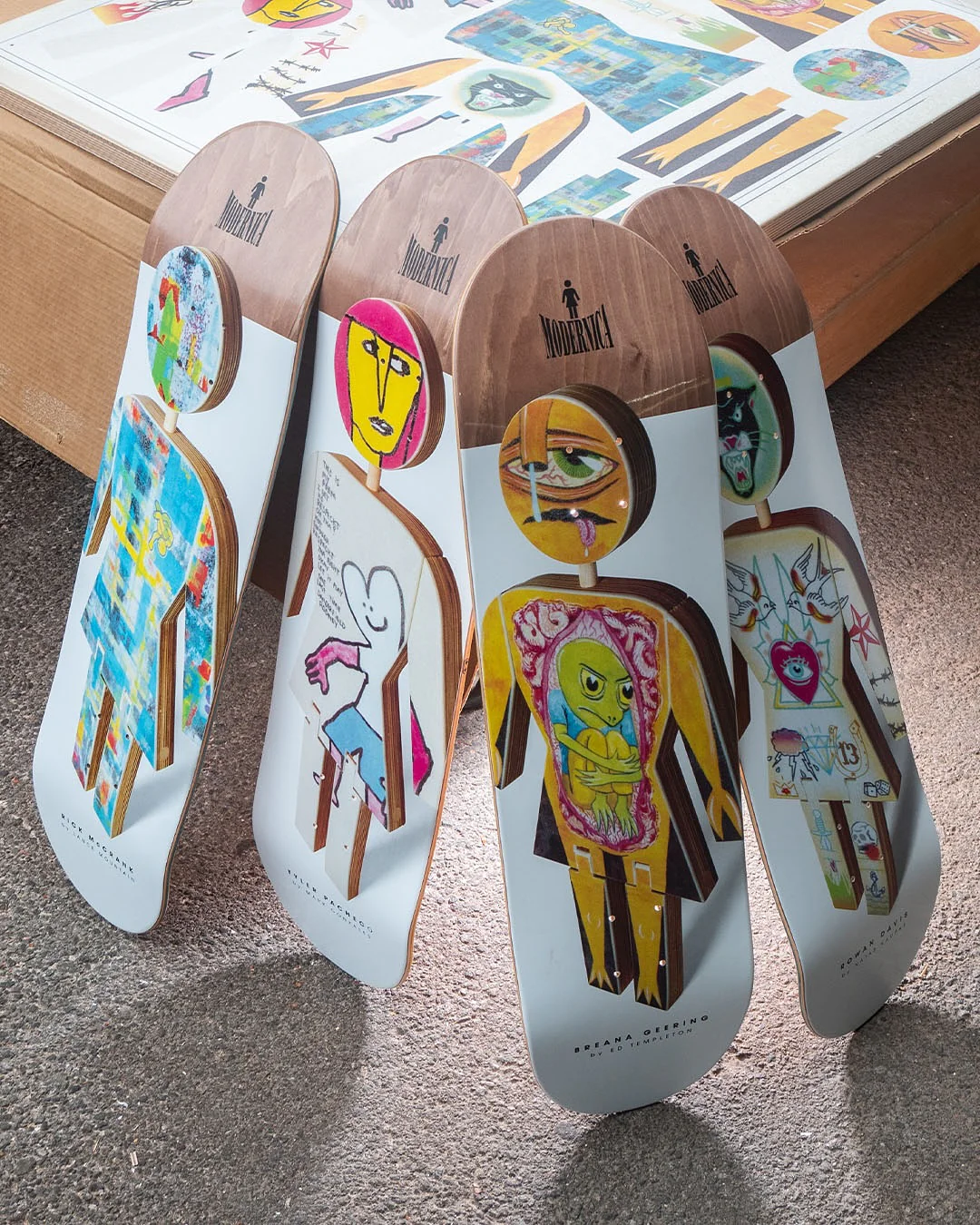
Modernica x Girl Skateboards series
When working for a brand, how do you distinguish between what comes from your personal taste and what truly serves the brand’s identity?
I think that pretty easy. We have staff meetings once a week to go over the lines. Everyone in the room gets it. Some graphics or concepts make it to the catalog for production and some don’t. Some artists make it through and some don’t. Some stuff goes back to the drawing board. No one gets their feelings hurt. We are almost always in agreement after the meetings. It’s a good process.
In an industry driven by seasons and constant releases, how do you maintain visual and cultural coherence over the long term?
Well, I don’t think we look a it that way. I think, I hope, we are constantly evolving and not getting repetitive. We don’t take ourselves too seriously so we’re always open to new ideas. Last minute stuff is sometimes the best. It’s fresh. I also try to not look at what the other brands are doing.
Carlos and I have talked about that a lot. For me it’s like staying clear, not getting caught up in what the industry is doing. It’s almost impossible to do, of course, but I like the concept of not knowing..
After all these years and projects, what still makes you want to do this work?
I always tell people skateboarding put a curse on me many years back making impossible to work in any other industries. I’m comfortable in skateboarding, it’s my home. And the art and artists and skaters we do graphics for are always changing.
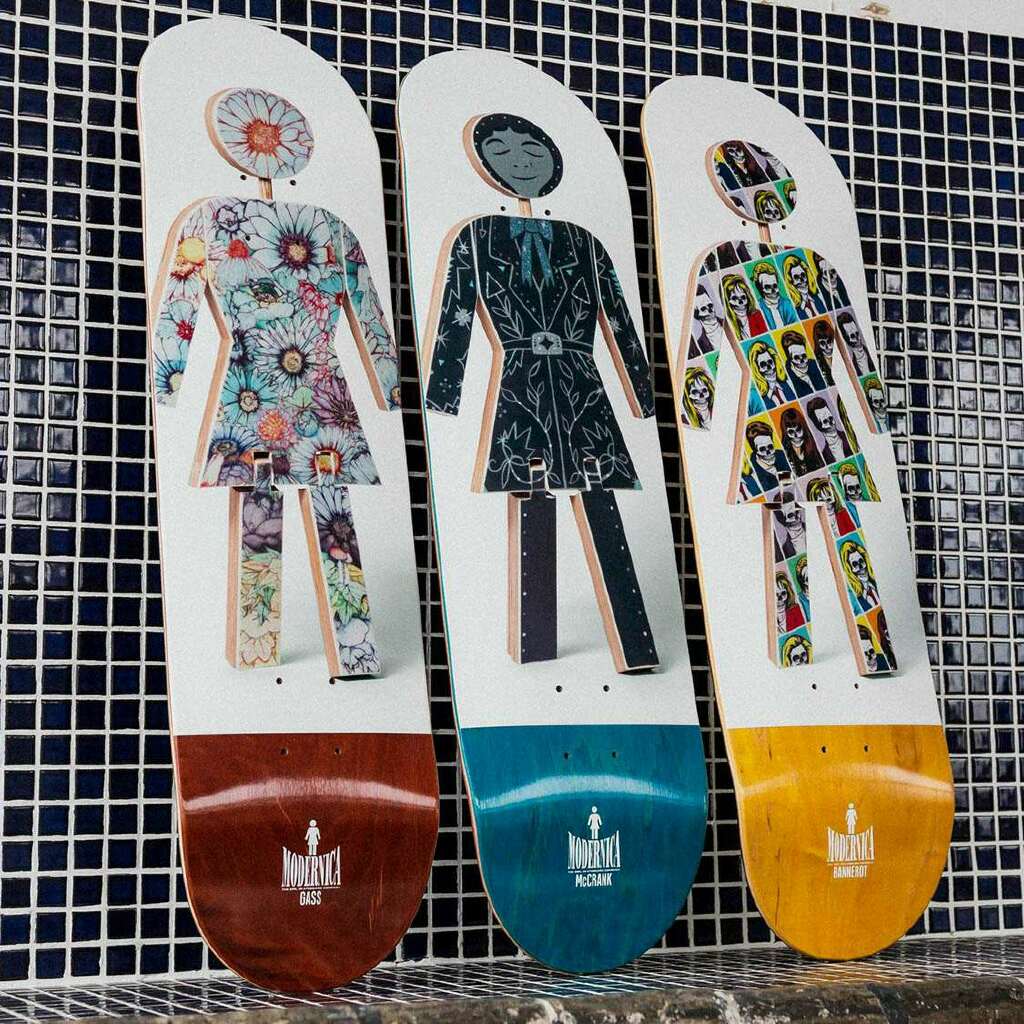
Modernica x Girl Skateboards series
And finally, what are your upcoming projects?
A few ideas to do Art Dump shows internationally later this year. There are a bunch of newer artists that will be invited, along with alumni. We’re looking at Hong Kong, Japan, Spain and Mexico. You never know. Ideally, the travel in in conjunction with a skate tour. Stoked on these possibilities.
And 8 last quick questions:
UNIQUE OR MASS PRODUCTION: One-off or small runs. Art.
PAPER OR TABLET SHEET: Paper. But I must admit, an iPad is an amazing tool..
SKATE & CREATE OR SKATE & DESTROY: BOTH! For sure.
WHAT BOOSTS YOU: Friends and family. Music – I can’t do work without music.
WHAT SLOWS YOU: Fear. Imposter syndrome is real.
FAVORITE TRICK: No Comply. Specifically Ray Barbee’s no complys.
FAVORITE SKATER: Right now, Simon Bannerot.
YOUR DREAM: To be happy. To feel content.